the fall · station 00Now you are the page. Watch the checks land.
Two lines of inspectors. On the left, code: it checks pixels, words, links, pictures, forms and the hidden code behind the page. On the right, the AI judge, asked only about the spots the code marked. No page skips a station. Keep scrolling.
station 01 · hold stillFirst, the page is held still.
Animations stopped, every picture loaded, fonts ready. Then the page is captured twice, in two fresh browsers, on your own machine. If the two screenshots disagree anywhere, a slideshow or a clock for example, that spot is painted out and written down. If they agree, you have a trusted copy to compare against.
desktop and phone sizes · both screenshots identical
station 02 · matchThen the sections are matched up.
The header, the hero, every block and the footer are paired across the two versions by their role, their heading and their first words. If a section has no partner, that is a fact of its own: a section is missing, or a section is new.
7 sections · 7 matched · 0 missing
station 03 · cutThen each page is cut into screens, at full size.
Each matched section is cut into slices one screen tall, with a small overlap so nothing falls between two cuts. The slices are never shrunk. An AI asked to read a shrunken page is reading smudges, and smudges are where invention starts.
this page: 4 slices, all at full size
station 04 · the code strikesEight checks, in order. Four of them find a change.
Pixels, exactly. Words, section by section. Links. Phone and email links. Pictures. Forms. The page title and settings. The whole hidden code behind the page. Where the two versions are identical, the blow glances off as frost. Where they differ, the blow lands, and that spot is lit.
found a change: pixels, words, phone links, hidden code. Identical: links, pictures, forms, title.
station 05 · litThe diff is on fire. Nothing else is allowed to burn.
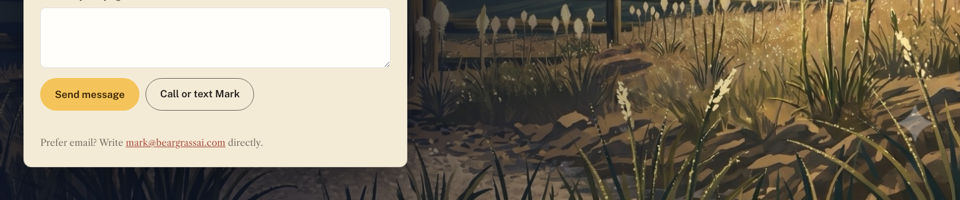
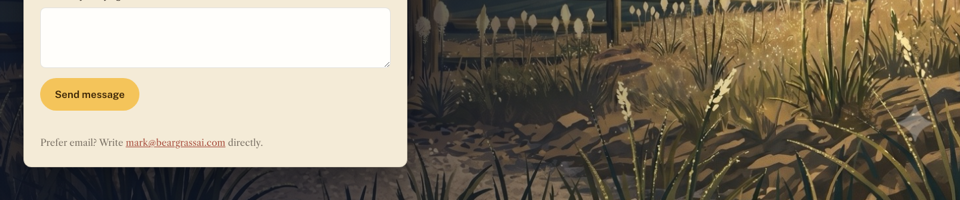
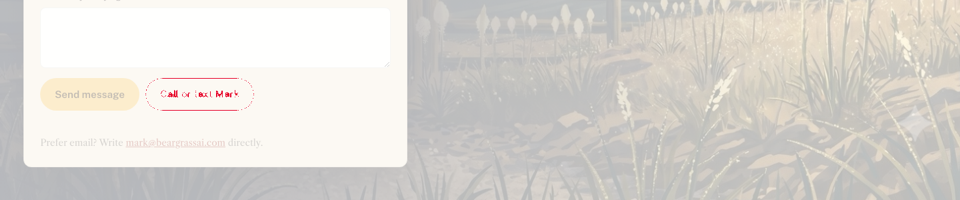
On this page, one slice changed: someone hid the “Call or text Mark” button. The lit box is exactly the button's own box. The same change is written down in words: the text that disappeared, the phone link that was hidden, and the exact place in the hidden code where the two pages part.
the box: 163 by 49 pixels, less than a tenth of a percent of the screen
station 06 · the judgeThe judge cannot write. That is why you can trust it.
The judge is Clef, a free AI from Cloudflare that you download and keep. It runs on your own machine. It looks at the lit slice and at a fixed list of questions, such as “are the buttons the same in both pictures?”, and answers each with a confidence from 0 to 1. That is all it can do. We ask it twice, with the two pictures swapped, and keep the less flattering answer.
here: “a button is missing in the new version”, confidence 0.93 one way round, 0.95 the other
station 07 · the testTrust is checked, not felt.
Before any answer counted, the judge sat a test: 791 planted mistakes, each with the right answer written down first. We also checked whether its confidence is honest, on 10,302 answers. When it says 45% it is right about 29% of the time; when it says 76% it is right 87% of the time. So the line where an answer counts comes from that check, not from the number the judge states.
it names a hidden link 100% of the time, a typo 43%, a re-cropped picture 8%. The code found all of them.
station 08 · the gateAt the gate, the result has to show the test it passed.
The result is one of three: the change passes, a person looks, or the change is blocked. If nobody asked for a change, anything lit is unexpected and a person looks. A question is allowed to block a change only after it has passed its test. Every other answer can only hold the change for a person, and says so.
this run: a person looks. The “what changed” questions have passed their test; the “was it asked for” question has not yet.
station 09 · the recordOut the far end with a folder, not a story.
Every run leaves a dated folder on your machine: the screenshots, the painted-out spots, the lit slices, every difference in words, every answer with its confidence both ways round, and the result with the test it rests on. Nothing in it is ever overwritten. Only what changed is lit. Nothing was invented, because nothing here can invent.
the folder: the run, the screenshots, every difference, every answer, and the report page